Blue Rock Farmland Commons, Ohio
July 8, 2025Carya Farmland Commons, Wisconsin
Latest News
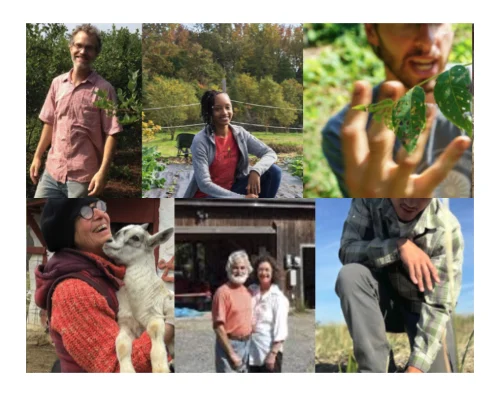
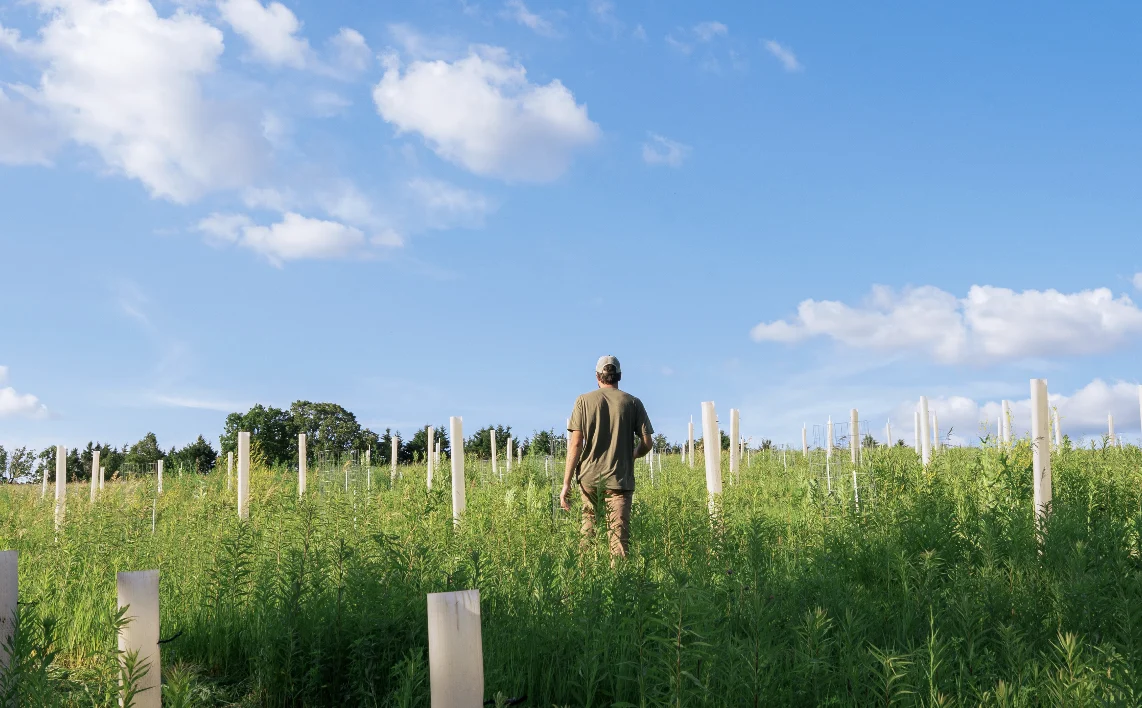
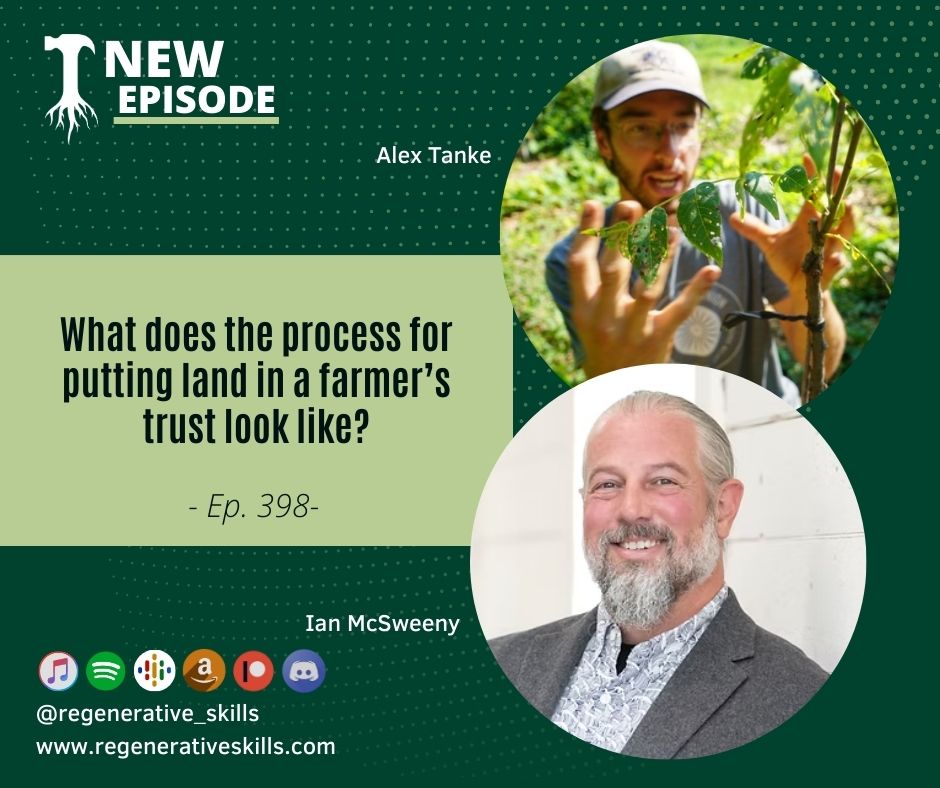

The Farmers Land Trust is partnering with Alex Tanke to hold, steward and protect a tree crop breeding and production farm focused on developing hybrid hickory/pecan as a crop for the upper Midwest.
Amazing Gift of Land
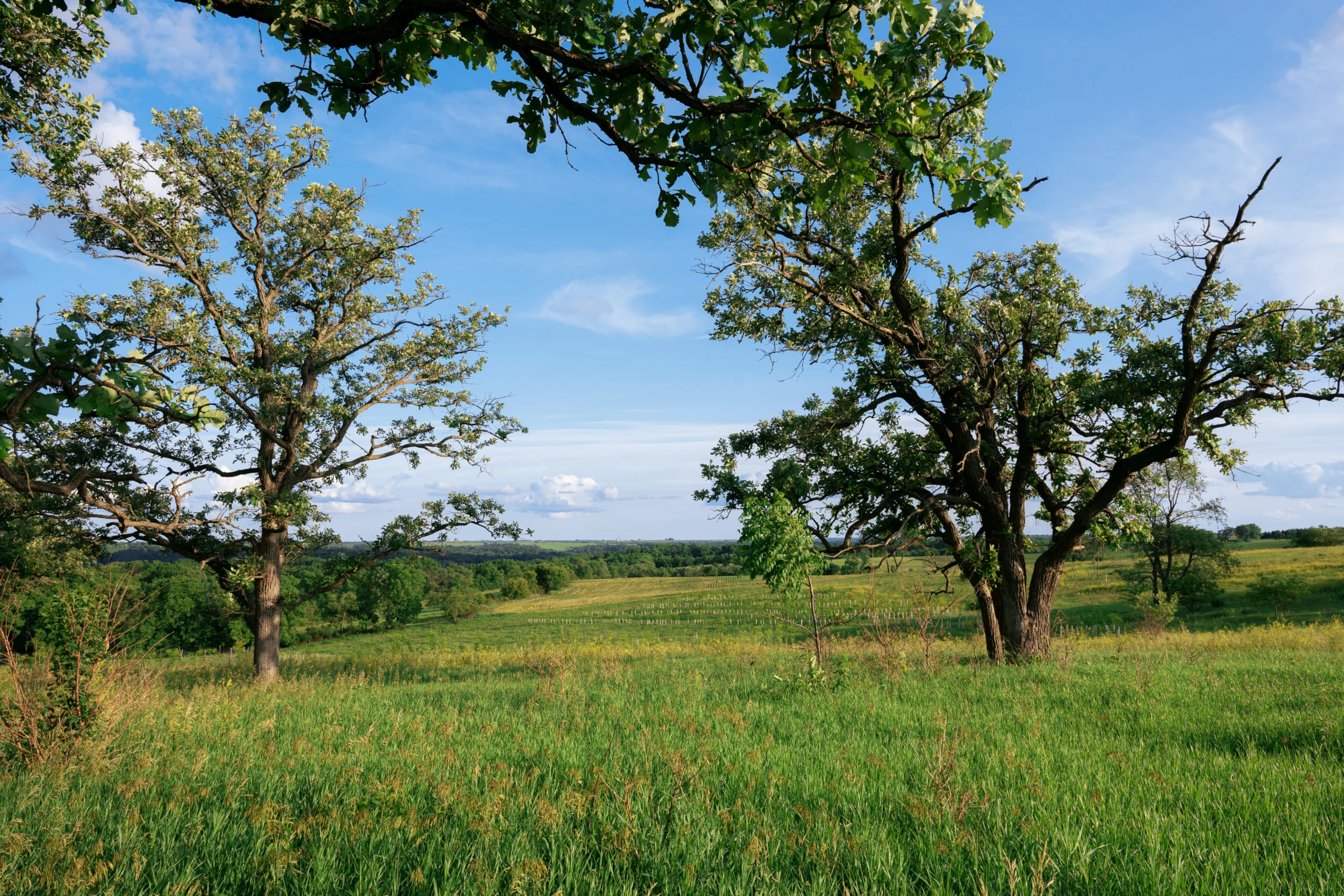
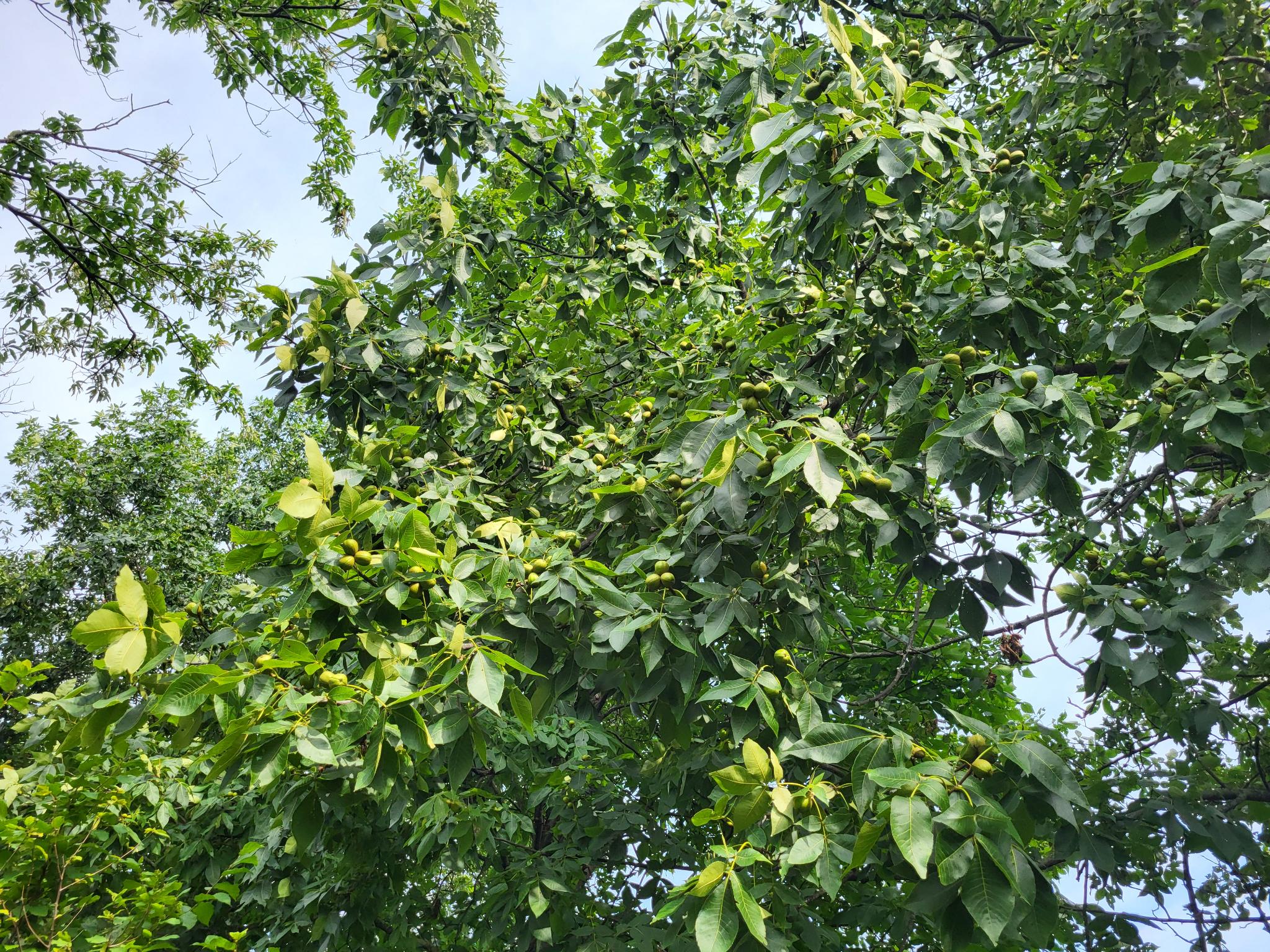
This gift of land is a 43-acre savanna structured, fire managed, regenerative farm that is a working genetic repository for Hybrid Hickory/Pecan, American Persimmon, and Honey Locust breeders in the upper midwest. The land is sequestering carbon, providing habitat, building soil, and producing fruit and nut crops.
A voluntary land tax payment of $50 per month is made by The Farmers Land Trust to Indigenous peoples for this land.
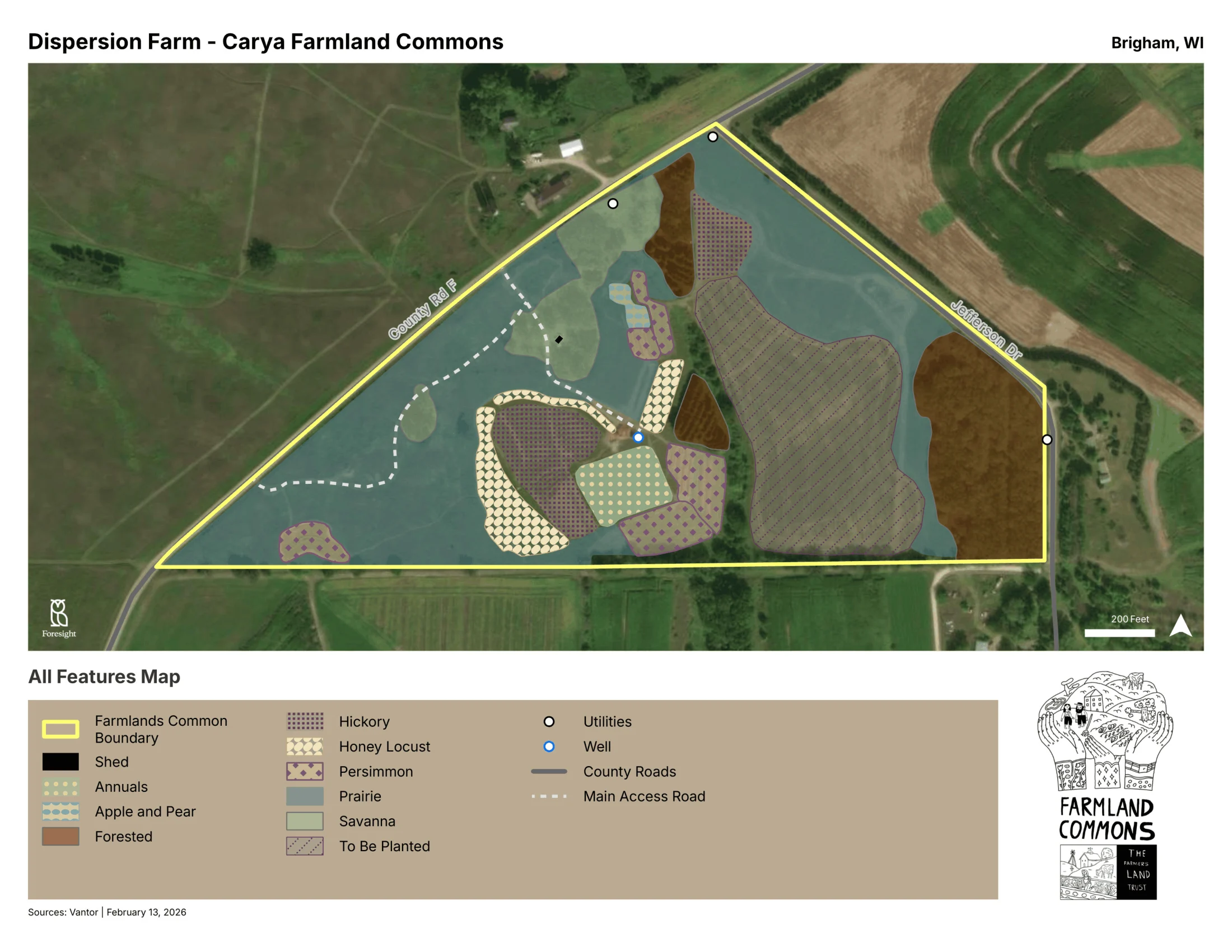
Carya Farmland Commons is being created to:
- Facilitate the transition from private ownership to community nonprofit commons holding
- Find well suited stewards for the land given the goals for the property
- Provide low cost land access to future farmer-stewards
- Provide guidance and hold agreements with future stewards through relationship, lease conveyance, and management plans supporting both enterprise production and stewardship of the land
- Ensure the continued protection of the genetic resource on the property while still offering management flexibility to future stewards
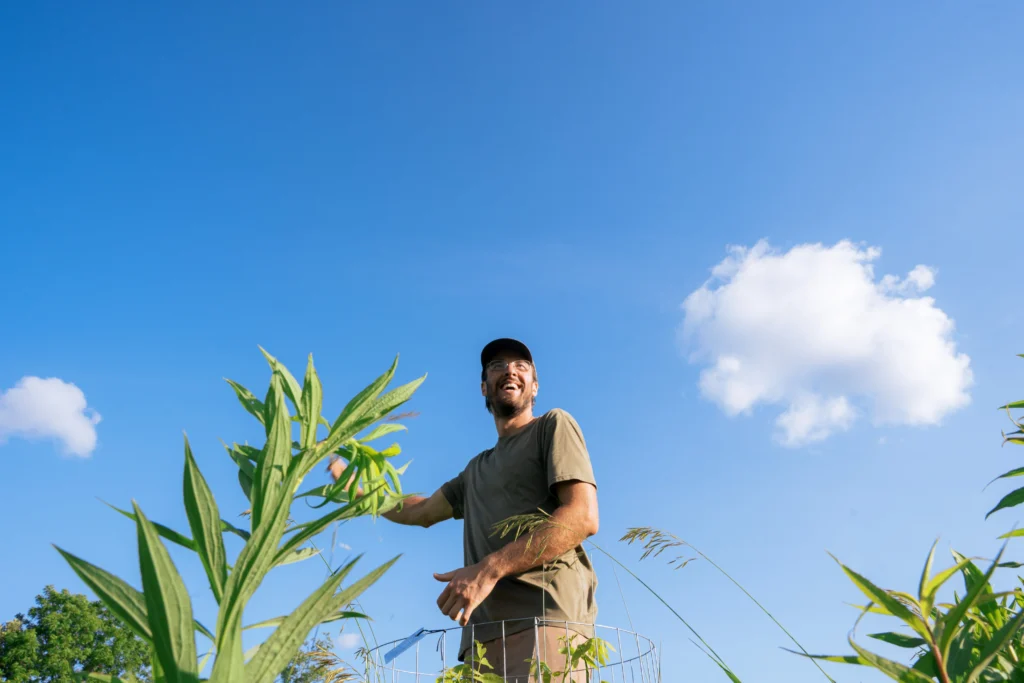 Meet the Steward, Breeder, and Land Donor
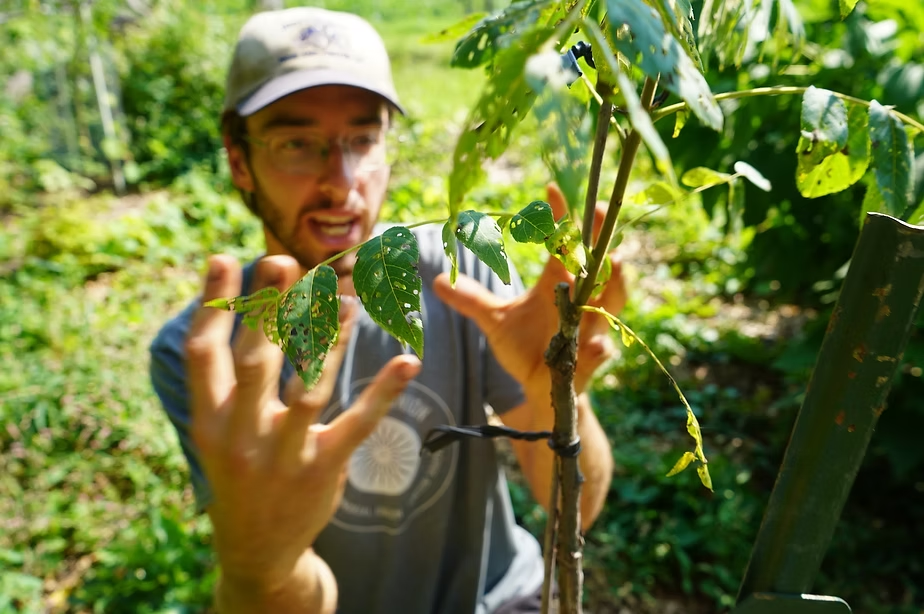
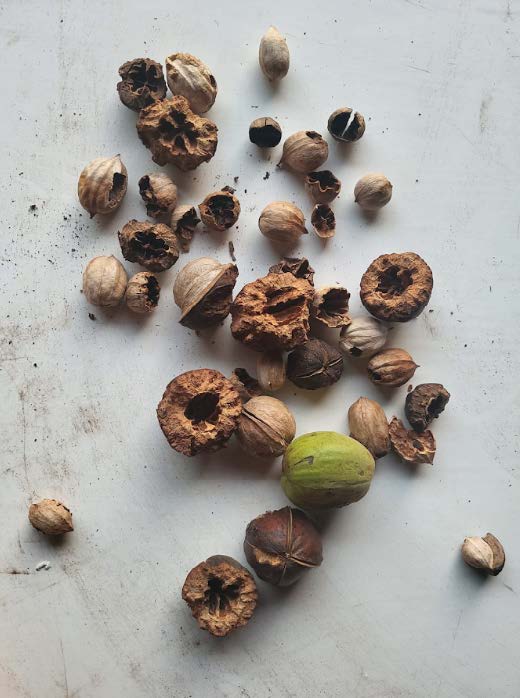
Alex Tanke is a tree crop breeder and nurseryman specializing in hybrid hickories, as well as smaller efforts with American Persimmon and Honey Locust. Alex's lifetime goal is to make the hickory a staple crop for both farmers and consumers in the Midwest by overcoming all the challenges hickory faces in its development, including tree genetics, processing machinery limitations, propagation costs, and orchard management unknowns. His work in selection has produced the only significant hybrid hickory repository in the region and his work in breeding is making the next generation of improved hybrid hickories for the upper Midwest, which the Carya Farmland Commons will protect. He is also making progress on all other issues in collaborations with other hickory propagators and processors including Fancy Twig Farm, Keystone Tree Crops Cooperative, and Yellowbud Farm. Hickory oil, milk, and kernel are rapidly making their way onto the market from these efforts.
Why a Farmland Commons?
"A conservation easement isn't enough to ensure that the breeding orchard isn't just planted to corn. This is the only way to ensure that my life's work isn't logged away. I have seen the hopeful story without a land trust play out many times at the history hickory breeding sites that I frequent. The land may stay in good hands for a generation or two, but eventually it gets logged off. For example, Carl Weschcke's orchard in Northern WI was the best source of hickory germplasm for the far North prior to half of it being logged; it is still an amazing place but I can only imagine what was lost." - Alex Tanke
Project Status
The land donation to The Farmers Land Trust is complete. Alex Tanke and Emma Kloes have a Life Estate on the farm, and a Farm Management Plan is in place.
The next steps are to find aligned non-profits to co-create the Carya Farmland Commons with, and raise the money needed to cover the project and carrying costs of the land.

Please support this profound land gift
A donation to the Carya Farmland Commons will endow this unique and important Dispersion Farm and will support the development of the 501(c)(25) Carya Farmland Commons, demonstrating regeneration and the interconnected dynamic systems of nature that sustain life, support health and create food.
Donations So Far
$35,405.58 raised of $35,400.00 (100%)
Recent Donors
- Jeff Swann $220.00
- Ian McSweeney $103.00
- Ashley Rozier $103.00
- Kathleen Blakistone $20.60
- Kristina Villa $103.00
- Anonymous Donor $10,000.00
- Walden Mutual Bank $100.00
- Mark Voss $154.50
- Sherry Dutzy $250.00
- Chris Gutschenritter $51.50
- In memory of Melvin Lancaster $51.50
- Aidan Benkowski $77.25
- Simon Stumpf $51.50
- Ben Simon $50.00
- Matthew Sarker $51.50
- Indigenous Land Tax paid by Alex and Emma $600.00
- Mark Voss $200.00
- Abby Lokai $20.60
- Legal Cost Savings $6,177.00
- Indigenous Land Tax Savings $1,000.00
- Title and Closing Cost Savings $490.00
- Anonymous $51.50
- James R Downing $51.50
- In memory of Brian and Catha McSweeney $103.00
- Leslie Winkler $50.00
- Ken and Lynn Rustici $100.00
- Austin Unruh $103.00
- Robert and Lisa Rustici $50.00
- Connie Dwyer $15,000.00
- In honor of Alex Tanke $20.60
- Kristina Villa $1.03
Stay in the loop!
Join the Carya Farmland Commons mailing list!
2024 SARE Project summary:
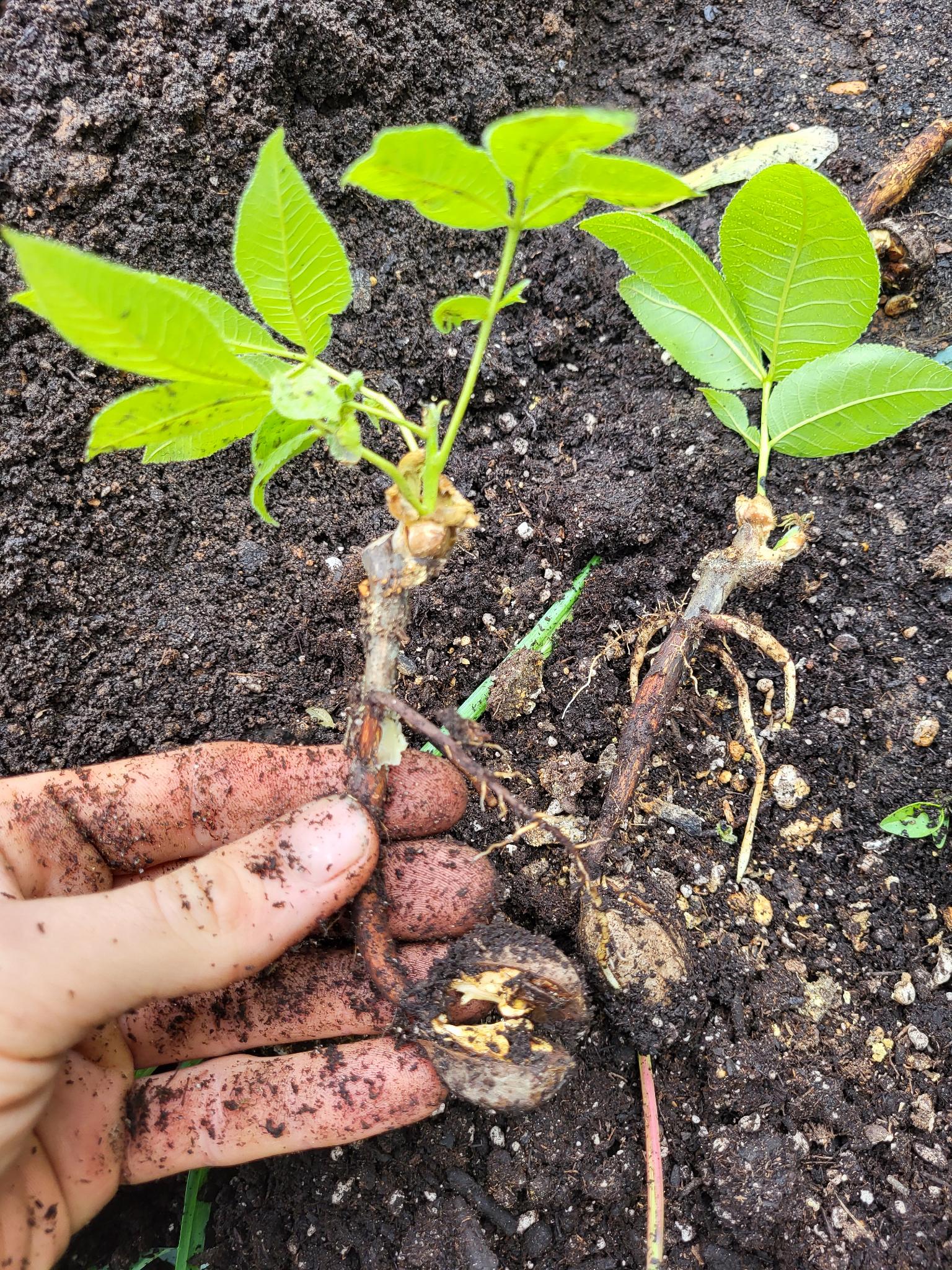
This is a research project with two main barriers, both of which will be important to break in order to make hickories a crop in the upper midwest.
- Tree evaluations need to be done on hundreds of hybrid individuals in the upper midwest to provide variety recommendations for growers there. Currently, only a small handful of subpar hickory selections have been made and often have been trialed only outside of zones 4 and 5 in the upper midwest. Additionally, evaluations are almost entirely anecdotal and insufficient to give growers security in planting varieties that are of high cost and may take over a decade to bear nuts.
- A procedure for epicotyl grafting hickories (grafting onto a sprouted nut) in zones 4 and 5 needs to be developed. Traditional nursery growing of hickories is challenging and problematic due to the high costs of producing grafted trees because of slow seedling shoot growth, strong taproot dominance, and the stress responses of hickories.
Regional Data
- 561,164 residents
- median age 37.5
- 91.6% White
- $74,583 median HH income
- 10.5% poverty
- WI avg farm real estate $5,890/acre
- cash rent $142/acre.
- $88,108 median HH
- $60,658 per capita
- 10.5% poverty.
- 9.2% of residents; 12.6% of children experiencing food insecurity
- 3,210 acres of orchards (apples, cherries, peaches)
- Distilled karst landscape; strong organic & regenerative farming; UW‑Madison Extension outreach; Capitol Square farmers’ market.
- Madison metro (~680 K) sources from 500+ farms within 150 mi; hosts 84+ farmers’ markets.
- Madison is home to the largest producer‑only market in the U.S. - The Dane County Farmers’ Market on Capitol Square is officially the largest producer‑only farmers’ market in the country, with roughly 150 vendors surrounding the State Capitol each summer.
- Fort Blue Mounds—a Black Hawk War stockade—stood just west of the village in 1832.